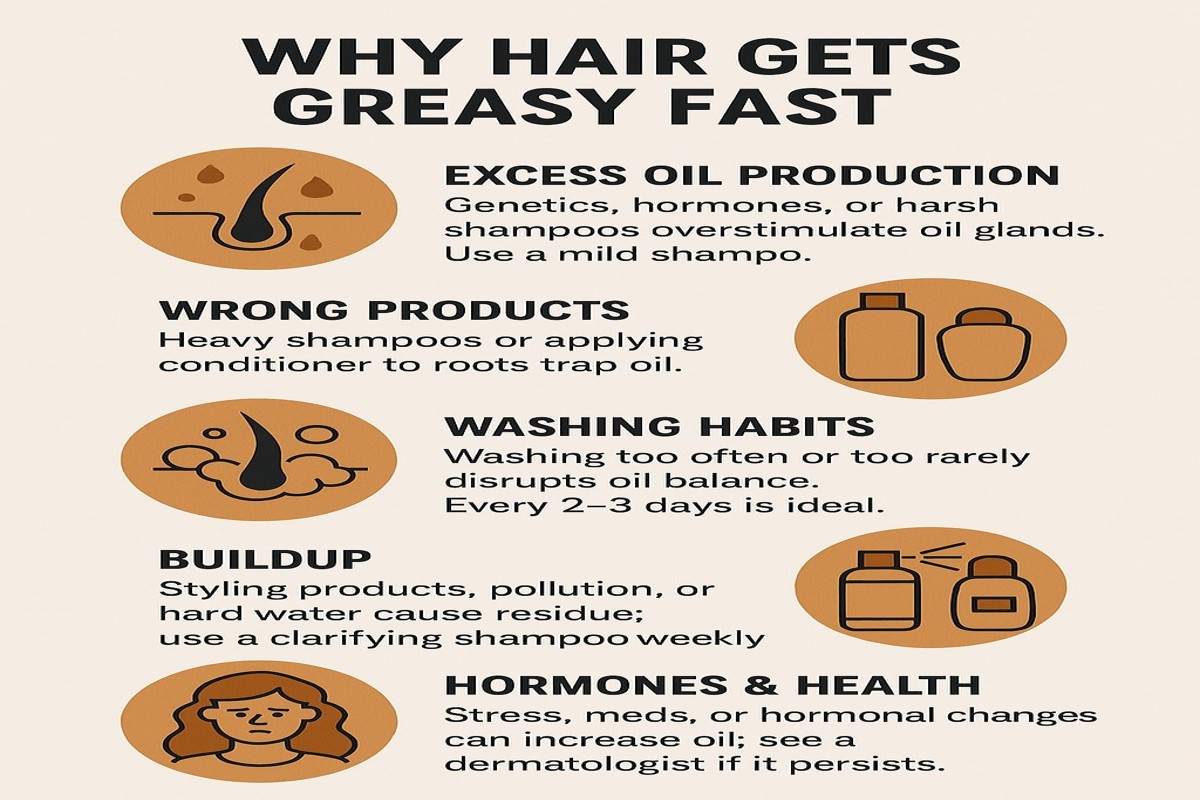
Why does my hair get so oily so fast? Oily hair is primarily caused by overactive sebaceous glands that produce excess sebum. This condition can be influenced by factors such as genetics, diet, and hair care routines.
Understanding the causes of oily hair is essential for effective management and maintaining healthy hair. Mismanagement can lead to issues such as scalp irritation, increased dandruff, and an overall unkempt appearance.
This article outlines the primary causes of oily hair, explores contributing factors, and provides practical solutions to help manage oiliness effectively.
What causes hair to become oily quickly?
Hair becomes oily quickly primarily due to the overactivity of sebaceous glands, which produce sebum, an oily substance that lubricates the hair and scalp. Factors such as genetics, hormonal changes, and environmental influences can exacerbate this condition, leading to an excess of oil production.
The sebaceous glands, located in the skin, are responsible for producing sebum. When these glands become overactive, they secrete more oil than necessary, resulting in greasy hair. This overproduction can be influenced by several factors:
- Hormonal fluctuations: Changes in hormone levels, particularly androgens, can stimulate sebaceous glands, making hair oilier.
- Genetics: A family history of oily hair can predispose individuals to similar conditions, as genetic factors play a significant role in sebaceous gland activity.
- Diet: High-fat diets or diets rich in refined sugars may increase sebum production, leading to oilier hair.
- Environmental factors: Humidity and pollution can contribute to oily hair by affecting the scalp’s natural balance.
Additionally, excessive washing or using harsh shampoos can strip the scalp of natural oils, prompting the sebaceous glands to compensate by producing even more oil. This cycle can create a frustrating situation for individuals seeking to manage oily hair effectively.
To mitigate oily hair, consider using gentle, clarifying shampoos that target excess oil without causing overcompensation from the scalp. Regularly adjusting hair care routines to suit individual needs can lead to more balanced oil production.
Expert Tip: Incorporating a weekly exfoliating scalp treatment can help manage oiliness by removing buildup and promoting a healthier scalp environment, ultimately reducing the speed at which hair becomes oily.
How can I reduce oiliness in my hair?
To reduce oiliness in your hair, implement a targeted hair care routine that balances oil production and cleanses effectively. Regular washing, appropriate product selection, and lifestyle adjustments can significantly help manage excess oil. Here are some practical steps to achieve this.
- Wash your hair regularly. Aim to wash your hair every 2-3 days using a mild, sulfate-free shampoo. Frequent washing can prevent oil buildup while avoiding overly harsh products that may irritate the scalp.
- Choose the right shampoo. Select shampoos specifically designed for oily hair. Look for ingredients like salicylic acid or tea tree oil, which can help control excess sebum production.
- Avoid heavy conditioners. Use lightweight conditioners only on the ends of your hair to avoid adding excess oil to the scalp. Opt for products labeled as “oil-free” or “lightweight.”
- Limit heat styling. Heat can stimulate oil production, so minimize the use of hot tools. When necessary, apply a heat protectant spray to reduce damage and oiliness.
- Modify your diet. Incorporate a balanced diet rich in omega-3 fatty acids, antioxidants, and vitamins. Reducing refined sugars and unhealthy fats can also help regulate oil production.
- Use dry shampoo. On off days, apply dry shampoo to absorb excess oil and add volume. This can extend the time between washes and keep your hair looking fresh.
- Maintain scalp hygiene. Regularly exfoliate your scalp to remove dead skin cells and product buildup. Consider using a scalp scrub or a gentle exfoliating shampoo once a month.
Implementing these steps can help you effectively manage oiliness and maintain healthy hair. Consistency is key; adjustments may take time to yield noticeable results.
For optimal results, consider consulting a dermatologist or trichologist if oiliness persists, as underlying scalp conditions may require specialized treatment.
Is oily hair a sign of poor hygiene?
No, oily hair is not necessarily a sign of poor hygiene. While inadequate washing can lead to an accumulation of oil, various factors influence oil production in the scalp. Genetics, hormonal changes, and environmental factors also play significant roles in how quickly hair becomes oily.
Many people mistakenly associate oily hair with a lack of cleanliness. In reality, individuals with oily hair may wash their hair frequently, but their scalp produces excess sebum. This natural oil is meant to protect the hair and maintain scalp health. However, certain conditions, such as oily skin or hormonal fluctuations, can lead to increased sebum production regardless of personal hygiene practices.
- Poor hygiene: Infrequent washing can lead to dirty hair, but this is not the sole cause of oiliness.
- Genetics: Some individuals are genetically predisposed to oilier scalps, which can be completely independent of their hygiene practices.
- Hormonal changes: Factors like puberty, menstruation, or stress can increase oil production, resulting in oily hair despite regular washing.
Moreover, environmental factors such as humidity and pollution can exacerbate oiliness. People living in humid climates may notice their hair becoming oily more quickly, as moisture in the air can interact with scalp oils. Additionally, using the wrong hair products can contribute to oiliness, as heavy conditioners or styling products may build up on the scalp.
Expert Tip: To manage oily hair effectively, consider using a clarifying shampoo once a week to remove excess sebum and product buildup. Look for lightweight, oil-free conditioners and avoid over-styling, which can exacerbate the problem.
What hair products are best for oily hair?
To manage oily hair effectively, consider using shampoos and treatments specifically formulated to control excess oil production. These products typically contain ingredients that help to clarify the scalp, remove buildup, and balance sebum production. Opting for the right products can significantly improve hair texture and overall appearance.
When selecting hair products for oily hair, look for those that include the following:
- Clarifying Shampoos: These shampoos contain stronger surfactants that deeply cleanse the scalp and hair, removing excess oil and product buildup. Use them once a week to maintain a clean scalp without over-drying.
- Volumizing Shampoos: Formulated to add body to fine or flat hair, these shampoos often contain lightweight ingredients that do not weigh hair down. They help to absorb oil and maintain a fresher appearance.
- Tea Tree Oil Treatments: Known for its antibacterial properties, tea tree oil can help regulate oil production on the scalp. Look for shampoos or scalp treatments that list tea tree oil as a key ingredient.
- Dry Shampoo: Ideal for quick oil absorption between washes, dry shampoo can extend the freshness of your hair. Opt for products that contain natural starches to soak up oil without leaving a heavy residue.
- Exfoliating Scalp Scrubs: These products help remove dead skin cells and excess oil from the scalp. Regular exfoliation can promote a healthier scalp environment, reducing oiliness over time.
Incorporating these products into a regular hair care routine can lead to a noticeable reduction in oiliness. Additionally, consider adjusting washing frequency based on individual scalp oil production, which may vary due to factors like hormonal changes or diet.
Expert Tip: Pairing these products with proper scalp care, such as using a gentle exfoliating scrub once a month, can enhance results and maintain optimal scalp health.
How often should I wash my hair if it’s oily?
For oily hair, washing every 1 to 3 days is generally recommended. The frequency can vary based on individual hair types, lifestyle, and the severity of oiliness. Some may find they need to wash daily, while others can manage every few days.
Several factors influence how often to wash oily hair. Hair type plays a crucial role; fine hair tends to get oily faster than thick or curly hair. Additionally, activity level matters; individuals who exercise frequently or live in humid environments may need to wash their hair more often due to increased sweat and oil production. Scalp health is another consideration; conditions like seborrheic dermatitis can exacerbate oiliness, necessitating more frequent washing.
Another important aspect is the type of shampoo used. Clarifying shampoos, designed to remove excess oil and product buildup, can be beneficial for oily hair but should not be used daily, as they can strip the scalp of essential oils and lead to increased oil production. Conversely, using a moisturizing shampoo may be counterproductive for those with oily hair, as it can contribute to greasiness.
Ultimately, finding the right balance is key. Those with oily hair should experiment within the 1 to 3-day range to determine what works best for their specific needs. Adjusting hair washing frequency based on environmental factors and lifestyle can lead to healthier, more manageable hair.
Expert Tip: Consider using dry shampoo on non-wash days to absorb excess oil and maintain a fresh appearance. This can extend the time between washes while keeping hair looking clean.
Can diet affect how oily my hair gets?
Yes, diet can significantly influence how oily hair becomes. The foods consumed can impact sebum production, the natural oil produced by the scalp, which in turn affects hair oiliness. Specific dietary choices may lead to increased oiliness or help maintain a balanced scalp environment.
For example, a diet high in refined carbohydrates and saturated fats can stimulate sebum production. Foods such as white bread, sugary snacks, and fried items can cause hormonal fluctuations, leading to an overproduction of oil. Conversely, incorporating more omega-3 fatty acids, found in fish like salmon and walnuts, can help regulate oil production. Vegetables and fruits rich in vitamins A and E, such as carrots and spinach, also promote healthier scalp conditions.
Another aspect to consider is hydration. Insufficient water intake can lead to an imbalance in oil production. When the body is dehydrated, the scalp may overcompensate by producing more oil, resulting in greasy hair. Maintaining a balanced diet with adequate hydration can help mitigate excess oiliness.
Expert Tip: Monitoring your intake of dairy products is also advisable, as some individuals may experience increased oiliness due to lactose or casein sensitivity. Adjusting dietary habits and observing changes in hair oiliness can provide valuable insights into personal triggers.
Are there home remedies for oily hair?
Yes, several effective home remedies can help manage oily hair. These natural solutions can reduce excess oil production and improve hair health without the use of harsh chemicals. Incorporating these remedies into your hair care routine may lead to noticeable results.
- Apple Cider Vinegar Rinse: Mix one part apple cider vinegar with two parts water. After shampooing, apply this mixture to your hair, leave it on for a few minutes, and rinse thoroughly. This remedy helps balance scalp pH and removes excess oil.
- Baking Soda Paste: Combine three tablespoons of baking soda with water to create a paste. Apply it to your scalp and hair, then rinse after five minutes. Baking soda absorbs oil effectively and can reduce greasiness.
- Lemon Juice Treatment: Squeeze the juice of one lemon into a cup of water and use it as a final rinse after washing your hair. Lemon juice is a natural astringent that helps eliminate oil and refreshes the scalp.
- Tea Tree Oil Solution: Add a few drops of tea tree oil to your shampoo or mix it with a carrier oil, such as coconut oil. This oil has antimicrobial properties that can help control oil production and prevent scalp issues.
- Herbal Infusions: Brew a strong tea using herbs like rosemary or nettle, then use it as a rinse. These herbs have astringent properties that can help reduce oiliness and promote a healthier scalp.
Regular application of these remedies can help manage oily hair effectively. However, consistency is key; results may take time. Additionally, individual hair types may respond differently, so it may be necessary to experiment to find the most suitable remedy.
For optimal results, consider adjusting your washing frequency based on your hair type and lifestyle. Over-washing can lead to increased oil production, so aim for a balanced approach.
The Role of Genetics in Oily Hair Production
This section explores the genetic influences on hair oiliness, shedding light on why certain individuals experience an increase in oil production more rapidly than others. Understanding these genetic factors can help tailor effective solutions for managing oily hair.
Genetic Predisposition to Overactive Sebaceous Glands
Oily hair often stems from overactive sebaceous glands, which are responsible for producing sebum, the natural oil that lubricates hair and skin. Genetics plays a significant role in determining the activity level of these glands. Individuals with a family history of oily hair are more likely to inherit traits that lead to heightened sebum production.
Family History and Its Impact on Hair Type
Research shows that hair type and oiliness can be influenced by genetic factors passed through generations. If parents or siblings have oily hair, the likelihood of inheriting similar characteristics increases. This familial tendency can manifest in various ways, including hair texture, thickness, and the rate of oil accumulation.
- Texture: Straight hair tends to appear oilier than curly hair, as the oil spreads more easily along the hair shaft.
- Thickness: Thicker hair may retain oil differently than finer hair, affecting how quickly it looks greasy.
- Growth Rate: Faster-growing hair may require more frequent washing due to increased oil production.
Understanding the Hormonal Factors Linked to Genetics
Hormones, particularly androgens, significantly influence sebum production. Genetic factors can dictate hormonal levels and sensitivities, impacting how oily hair becomes. For instance, individuals with a genetic predisposition to higher levels of androgens may experience increased oiliness. Conditions such as polycystic ovary syndrome (PCOS) also illustrate this connection, as hormonal imbalances can lead to overactive sebaceous glands.
Nuanced Perspectives on Genetic Influences
While genetics is a substantial factor in oily hair production, environmental elements, such as diet and lifestyle, can also play a role. Many articles overlook the interaction between genetics and these external factors. For instance, a diet high in refined sugars and unhealthy fats can exacerbate oiliness, regardless of genetic predisposition. Additionally, stress and hormonal fluctuations can further influence sebaceous gland activity, complicating the genetic narrative.
Practical Application
To manage oily hair effectively, consider the following strategies:
- Identify your hair type and oiliness pattern; adjust washing frequency accordingly.
- Incorporate products designed for oily hair, such as clarifying shampoos, which can help remove excess oil.
- Monitor dietary habits; reducing high-glycemic foods may help regulate oil production.
- Consult with a dermatologist if hormonal factors are suspected to be influencing your hair oiliness.
By understanding the genetic influences on oily hair, individuals can adopt tailored approaches to manage their hair health effectively.
Impact of Hormones on Hair Oiliness
This section explores the significant influence of hormonal changes on hair oil production. Understanding these factors is essential for managing oily hair effectively.

Hormonal Changes During Life Stages
Puberty, menstruation, and pregnancy are critical life stages that can result in increased oil production. During puberty, the body undergoes significant hormonal shifts, particularly with the increase in androgen levels. These hormones stimulate sebaceous glands, leading to heightened sebum production.
The menstrual cycle also affects oiliness. Fluctuations in estrogen and progesterone can lead to variations in sebum production, often resulting in oilier hair during certain phases of the cycle. Pregnancy introduces another layer of hormonal complexity, with increased androgens and other hormones contributing to changes in hair texture and oiliness.
The Role of Androgens in Sebum Production
Androgens, a group of hormones that includes testosterone, are pivotal in regulating oil production. Increased androgen levels stimulate the sebaceous glands, leading to excess oil. Conditions such as polycystic ovary syndrome (PCOS) can further exacerbate this issue due to elevated androgen levels, making hair oiliness a common concern among affected individuals.
Managing Hormonal Fluctuations
Addressing hormonal fluctuations can help control hair oiliness. Here are several strategies:
- Consult a healthcare professional: Seek advice on hormonal imbalances and potential treatments.
- Monitor diet: A balanced diet rich in vitamins and minerals can support hormonal health.
- Regular exercise: Engaging in physical activity can help regulate hormones and reduce oiliness.
- Stress management: Techniques such as yoga or meditation can lower cortisol levels, which may impact oil production.
Common Misconceptions
Many individuals believe that excessive shampooing can reduce oiliness. However, over-washing can strip the scalp of natural oils, prompting the sebaceous glands to produce even more sebum in response. This creates a cycle of oiliness that is often misunderstood. Additionally, not all oily hair is a result of poor hygiene; hormonal factors play a substantial role that is frequently overlooked.
Practical Steps for Management
To effectively manage oily hair, consider implementing the following actions:
- Choose sulfate-free shampoos that balance oil levels without over-drying the scalp.
- Limit hair washing to every other day or as needed, based on oiliness.
- Incorporate dry shampoo between washes to absorb excess oil.
- Consult with a dermatologist for tailored solutions, especially if experiencing severe oiliness.
By understanding the hormonal influences on sebum production, individuals can take informed steps to combat the issue of why does my hair get so oily so fast, leading to healthier, more manageable hair.
Common Mistakes in Hair Care for Oily Hair
Common hair care mistakes can significantly exacerbate oily hair conditions. Identifying these errors is essential for effective oil management and overall scalp health.
Using the Wrong Products
Choosing hair products that are not suited for oily hair can lead to increased oiliness. Many shampoos and conditioners contain heavy oils and silicones that may weigh hair down. Instead, opt for lightweight, oil-free formulations that specifically target oily scalps. Look for labels that mention “clarifying,” “balancing,” or “volumizing.”
- Shampoos: Avoid creamy or moisturizing shampoos that can add excess oil.
- Conditioners: Use conditioners only on the ends of hair, not the scalp.
- Styling Products: Minimize the use of serums and heavy gels that can contribute to oil buildup.
Over-Washing the Hair
Many individuals with oily hair mistakenly believe that washing their hair more frequently will solve the problem. In reality, over-washing can strip the scalp of its natural oils, prompting it to produce even more oil to compensate. This creates a vicious cycle of oiliness. Instead of washing daily, aim for every other day or even less frequently, depending on your scalp’s specific needs.
Neglecting Scalp Health
A healthy scalp is vital for managing oily hair. Neglecting to exfoliate or treat the scalp can lead to clogged pores, which can exacerbate oil production. Incorporate scalp treatments, such as exfoliating scrubs or clarifying masks, into your regular routine. These treatments help clear away dead skin cells and excess oil, promoting a balanced scalp environment.
Common Misconceptions About Oily Hair
One common misconception is that oily hair is solely a product of genetics. Although genetics play a role, external factors such as diet, stress, and environmental conditions significantly influence oil production. Additionally, many people believe that using more shampoo will yield cleaner hair. However, using too much shampoo can lead to buildup, further aggravating oiliness.
Expert-Level Distinctions
Not all oils are created equal. While sebum is the natural oil produced by the scalp, using products with certain oils, such as coconut oil, can be beneficial in small amounts. These oils can help maintain moisture without causing excess greasiness. Understanding the difference between beneficial oils and those that contribute to oiliness is crucial for effective hair care.
Practical Applications
To address oily hair effectively, consider the following actionable steps:
- Select lightweight, oil-free products tailored for oily hair.
- Limit washing to every other day, allowing your scalp to regulate oil production naturally.
- Incorporate scalp treatments at least once a week to promote a healthy scalp environment.
- Monitor your diet and reduce high-sugar or high-fat foods that may influence oil production.
Lifestyle Changes to Manage Oily Hair
This section explores practical lifestyle modifications that can significantly reduce the rapid oiliness of hair. By addressing diet, stress levels, and hairstyle choices, individuals can achieve a more balanced scalp environment.
Balanced Diet and Hydration
A well-rounded diet plays a crucial role in regulating sebum production. Foods high in omega-3 fatty acids, such as salmon and walnuts, can help balance oil production. Incorporate fresh fruits and vegetables rich in vitamins A, C, and E, which promote healthy hair and scalp. Additionally, limit intake of greasy, processed foods that can exacerbate oiliness.
Hydration is equally vital. Aim for at least 8 cups (64 ounces) of water daily. Proper hydration supports overall body functions, including the regulation of oil production. Dehydration can trigger the scalp to produce excess oil to compensate for dryness.
Stress Management Techniques
High stress levels can lead to increased oil production due to hormonal fluctuations. Implementing stress management techniques can mitigate this effect. Consider the following methods:
- Meditation: Practicing mindfulness can reduce stress and improve overall well-being.
- Exercise: Regular physical activity helps release endorphins, which can lower stress levels.
- Breathing exercises: Simple deep-breathing techniques can help calm the mind and reduce anxiety.
Incorporating these practices into daily life can help create a more balanced hormonal environment, thereby reducing the rapid oiliness of hair.
Choosing the Right Hairstyles
Certain hairstyles can minimize the appearance of oily hair and extend the time between washes. Consider these options:
- Loose Updos: Styles like buns and ponytails keep hair off the face and neck, reducing the visible oil.
- Braids: Braids can disguise oiliness while maintaining a polished look.
- Headbands or Scarves: These accessories can help absorb excess oil and provide a stylish solution.
Avoid hairstyles that pull hair tightly against the scalp, as this can stimulate oil production due to increased friction and tension.
Nuances and Common Misconceptions
Many individuals believe that washing hair more frequently will solve oily hair issues. However, over-washing can strip natural oils, prompting the scalp to compensate by producing even more oil. It’s essential to find a balance in washing frequency that suits individual hair types. Additionally, using harsh shampoos can irritate the scalp, leading to an increase in oil production. Gentle, sulfate-free shampoos are often recommended to maintain a healthy scalp environment.
Practical Application
To manage oily hair effectively, adopt a balanced diet rich in omega-3s, stay well-hydrated, and implement stress-reducing practices. Experiment with different hairstyles that minimize the appearance of oil. Monitor how these lifestyle changes affect your hair’s oiliness over time, and adjust your routine as necessary. Aim for a consistent approach to achieve the best results in managing why does my hair get so oily so fast.
Frequently Asked Questions
What causes hair to become oily quickly?
Hair becomes oily quickly due to overactive sebaceous glands that produce excess sebum. Factors such as genetics, hormonal changes, and environmental conditions can contribute to this increased oil production.
How can I reduce oiliness in my hair?
To reduce oiliness, consider using a clarifying shampoo and avoid heavy conditioners. Additionally, limit the use of styling products that can weigh hair down and trap oil.
Is oily hair a sign of poor hygiene?
Oily hair is not necessarily a sign of poor hygiene; it often results from natural oil production. Regular washing can help manage oil levels, but some individuals may still experience greasiness due to their scalp’s characteristics.
What hair products are best for oily hair?
Shampoos specifically formulated for oily hair, often labeled as “clarifying” or “oil control,” are ideal. Lightweight conditioners and styling products that do not contain heavy oils can also help maintain balance.
How often should I wash my hair if it’s oily?
If hair is oily, washing it every 1-2 days is typically recommended to manage excess oil. However, individual hair types and lifestyles may require adjustments to this frequency.
Can diet affect how oily my hair gets?
Yes, diet can influence oil production in the scalp. Consuming a balanced diet rich in vitamins, minerals, and healthy fats may help regulate sebum production and improve overall hair health.
Are there home remedies for oily hair?
Home remedies for oily hair include using apple cider vinegar or lemon juice as a rinse to balance scalp pH. Additionally, applying natural astringents like witch hazel can help reduce oiliness.
Final Thoughts on why does my hair get so oily so fast
Understanding the underlying causes of rapid oil production in hair is crucial for implementing effective management strategies. Factors such as genetics, hormonal fluctuations, and common hair care mistakes significantly contribute to oiliness, and addressing these can lead to healthier hair.
To combat excess oil, consider incorporating a clarifying shampoo into your routine once a week to remove buildup, while also avoiding overly moisturizing products that can exacerbate the issue.
Addressing oily hair not only enhances personal grooming but also fosters confidence and self-expression, making it an essential aspect of overall well-being.
Leave a Reply