
How much do hair extensions cost varies widely based on type and application method. Prices can range from $100 to over $3,000 depending on quality and length. Understanding these costs is crucial for anyone considering hair extensions.
This topic is important for potential buyers, hairstylists, and salon owners alike. Misjudging the investment required can lead to dissatisfaction with the final results or unexpected expenses that strain budgets.
This guide covers the different types of hair extensions, application methods, and detailed pricing breakdowns, enabling informed decisions for anyone interested in enhancing their hairstyle.
What factors affect the cost of hair extensions?
The cost of hair extensions typically ranges from $100 to over $3,000, depending on several key factors. These factors include the type of hair used, the length of the extensions, and the method of application. Understanding these elements can help you make an informed decision when considering hair extensions.
First, the type of hair significantly influences the cost. Extensions made from 100% human hair are generally more expensive than synthetic options. Human hair offers a more natural appearance and can be styled with heat tools, while synthetic hair tends to be less durable and limited in styling options. Additionally, the quality of human hair, such as Remy or virgin hair, will further affect pricing, with higher quality hair commanding a premium.
Another important factor is the length of the extensions. Longer extensions require more hair, which increases the overall cost. Standard lengths range from 14 inches to 24 inches or more, with prices escalating as the length increases. Furthermore, the application method plays a crucial role in determining the price. Methods such as tape-in, sew-in, or fusion extensions vary in complexity and time required for application. For example, tape-in extensions are generally less expensive and quicker to apply than fusion extensions, which involve a more intricate bonding process.
Additional factors include the salon’s location and reputation, as well as any maintenance or aftercare products that may be recommended. Some salons charge a premium for their expertise and service quality, which can also impact the total cost.
Expert Tip: When selecting hair extensions, consider not only the initial cost but also the longevity and maintenance required for each type. Investing in higher quality hair and professional application can result in better long-term results and satisfaction.
How long do hair extensions last?
Hair extensions can last anywhere from 4 to 12 months, depending on the type and maintenance. Synthetic extensions typically last about 4 to 6 months, while high-quality human hair extensions can last 6 to 12 months or longer with proper care. Maintenance plays a crucial role in determining their longevity.
The lifespan of hair extensions is significantly influenced by the type of extensions chosen. For instance, clip-in extensions are designed for temporary use and can last up to a year with gentle handling and proper storage. In contrast, bonded or tape-in extensions, which are semi-permanent, may last 6 to 8 weeks before requiring reapplication, but with excellent care, they can remain in good condition for several months. Remy human hair extensions, which are cuticle-aligned, offer superior durability and can withstand styling and washing better than lower-quality options.
Maintenance practices also dramatically affect how long hair extensions last. Regular washing with sulfate-free shampoos, avoiding excessive heat, and using appropriate conditioning treatments can extend their lifespan. Additionally, routine salon visits for professional maintenance, especially for bonded or tape-in extensions, can help preserve their attachment and overall appearance. Neglecting these practices can lead to tangling, matting, or premature wear, significantly shortening their usability.
Expert Tip: To maximize the lifespan of hair extensions, invest in a silk or satin pillowcase. This reduces friction while sleeping, preventing tangles and hair breakage, ultimately prolonging their wear.
Are expensive hair extensions worth it?
Expensive hair extensions are generally worth the investment due to their superior quality, durability, and natural appearance. While cheaper options may seem appealing, they often lack the longevity and aesthetic appeal of higher-end products. Ultimately, the choice depends on individual priorities and budget considerations.
When comparing expensive hair extensions to more affordable options, several factors emerge that highlight the differences:
- Material Quality: High-end extensions are typically made from 100% human hair, which allows for styling versatility and a more natural look. Cheaper extensions often use synthetic fibers, which can appear unnatural and are limited in styling options.
- Durability: Premium extensions can last up to a year or longer with proper care, while budget options may only last a few months. This longevity saves money over time, as frequent replacements may be necessary with lower-quality products.
- Appearance: Expensive extensions tend to blend seamlessly with natural hair, offering a more polished and realistic appearance. Cheaper extensions may have a shiny, plastic-like finish that can be easily detected.
Moreover, the installation process for high-quality extensions is often more precise, resulting in a more comfortable fit and reduced damage to natural hair. Professional application is recommended for both types, but skilled stylists may charge more for the installation of premium extensions due to their complexity.
For those considering hair extensions, it is essential to evaluate not just the initial cost but also the long-term benefits. Investing in high-quality extensions can lead to better overall satisfaction and a more natural look over time.
Expert Tip: Always consult with a hair extension specialist to determine the best options for your hair type and desired look. They can provide insights into the specific brands and types that will work best for your individual needs.
What are the different types of hair extensions?
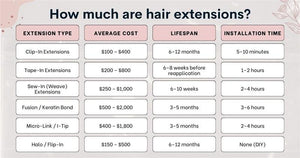
Hair extensions come in several types, each with unique application methods and cost structures. The most common types include clip-in, tape-in, sew-in, micro-link, and fusion extensions. Each type varies in terms of installation time, maintenance, and price, which can influence a user’s choice based on their needs and budget.
Clip-in extensions are temporary and can be applied and removed easily at home. They typically range from $100 to $400, depending on the quality and length. Tape-in extensions are semi-permanent and require professional application, usually costing between $200 and $600. These extensions last around 6-8 weeks and can be reused with proper care. Sew-in extensions, also known as wefts or bundles, involve braiding the natural hair and sewing the extensions in place. This method can cost between $300 and $800, including the price of the hair and the installation process.
- Micro-link extensions: These are applied using small beads to attach the extension to natural hair, allowing for movement and style versatility. Prices typically range from $300 to $1,000.
- Fusion extensions: These involve keratin bonds that are melted to attach extensions to natural hair. This method is more expensive, usually costing between $800 and $2,000, and can last several months with proper maintenance.
Factors such as hair quality, length, and the stylist’s expertise can significantly affect the overall cost of hair extensions. High-quality human hair extensions tend to be more expensive than synthetic options, which may not last as long. Additionally, maintenance and regular touch-ups can add to the total cost over time.
Expert Tip: When considering hair extensions, prioritize quality over price. Investing in higher-quality extensions can save money in the long run due to their longevity and reduced maintenance needs.
How do I choose the right hair extensions for my hair type?
Choosing the right hair extensions involves assessing your hair’s texture, color, and the style you desire. Selecting extensions that match these factors ensures a natural look and seamless integration with your existing hair. Here are some best practices to guide your decision.
- Match Hair Texture: Determine whether your hair is straight, wavy, or curly. Choose extensions with a similar texture to prevent noticeable differences. For example, if you have wavy hair, opt for wavy extensions to maintain consistency.
- Color Coordination: Select extensions that closely match your natural hair color. If you have highlights or lowlights, consider extensions that replicate these variations. Many brands offer color-matching tools or swatches to assist in this process.
- Consider Length and Volume: Assess how much length or volume you want to add. Extensions come in various lengths and densities. If aiming for a dramatic change, opt for longer, thicker extensions, but ensure they blend well with your hair.
- Choose the Right Type of Extensions: There are various types of extensions, such as clip-ins, tape-ins, and sew-ins. Your choice should depend on how permanent you want the extensions to be and your lifestyle. Clip-ins are ideal for temporary changes, while tape-ins and sew-ins offer a more lasting solution.
- Consult a Professional: If uncertain, seek advice from a hairstylist. They can provide personalized recommendations based on your hair type and desired outcome, ensuring you select the most suitable extensions.
Investing time in selecting the right hair extensions pays off in achieving a natural and cohesive look. Remember, the goal is to enhance your natural beauty while ensuring comfort and manageability.
Expert Tip: Always test a small section of your hair with the extensions before committing to a full installation. This trial can help assess how well they blend with your hair and how they react to styling products.
Can I install hair extensions myself?
Yes, you can install hair extensions yourself, but it requires careful consideration of techniques and materials. DIY installation can save money, but it may not yield professional results or the longevity of salon installations. Weighing the pros and cons is essential before proceeding.
- Evaluate your skills: Assess your comfort level with hair styling and your ability to follow installation instructions. Some methods, like clip-ins, are user-friendly, while others, such as tape-ins or bonds, may require more practice.
- Choose the right type of extensions: Select extensions that suit your hair type and desired look. Clip-in extensions are ideal for beginners, while sew-in or tape-in extensions may require more advanced techniques.
- Research installation techniques: Look for tutorials or guides specific to the type of extensions you choose. Online resources can provide step-by-step instructions, but consider the complexity of the method before starting.
- Consider the cost of materials: While DIY installation can lower overall costs, high-quality extensions and necessary tools can add up. Weigh the initial investment against potential savings from avoiding salon fees.
- Be mindful of maintenance: DIY installations require regular upkeep. Improper application can lead to tangling, shedding, or damage to your natural hair, which may incur additional costs in the long run.
Professional installation often ensures a better fit, style, and longevity for hair extensions. However, for those who are skilled and prefer a hands-on approach, DIY can be a rewarding option.
Expert Tip: If attempting a DIY installation, practice on a wig or mannequin before applying extensions to your own hair. This will help refine your technique and prevent costly mistakes.
What is the average cost of professional hair extension installation?
The average cost of professional hair extension installation ranges from $100 to $600, depending on various factors. Basic installations may start around $100, while more complex methods and higher-quality extensions can reach up to $600 or more. In some cases, specialty services or premium products can exceed this range.
Several factors influence the cost of hair extension installation. The first is the type of extensions used, such as clip-in, tape-in, fusion, or micro-link. Each method has different pricing structures due to the complexity of the installation process. Additionally, the quality of the hair extensions plays a significant role; human hair extensions typically cost more than synthetic options due to their durability and natural appearance.
- Technician Experience: More experienced stylists may charge higher rates for their expertise and skill.
- Salon Location: Salons in urban areas or high-demand regions often have elevated prices compared to those in rural locations.
- Length and Volume: The desired length and volume of the extensions can increase costs, as more hair is required for longer or fuller styles.
Additional costs to consider include maintenance and aftercare, which can range from $50 to $150 per appointment. Regular upkeep is necessary to ensure the longevity and appearance of the extensions, adding to the overall investment.
Expert Tip: Investing in high-quality extensions and professional installation can significantly enhance the longevity and natural look of your hair, making it a worthwhile consideration for those seeking a polished appearance.
How often do I need to maintain hair extensions?
Hair extensions require maintenance every 4 to 8 weeks, depending on the type and method of application. Regular upkeep is essential to ensure longevity and to maintain a natural appearance. Failure to maintain extensions can lead to tangling, shedding, and damage to natural hair.
The maintenance schedule varies based on the type of extensions. For example, typically need reapplication every 6 to 8 weeks, as they can slip as the natural hair grows. Bonded or fusion extensions require maintenance every 4 to 6 weeks due to the adhesive bonds loosening over time. On the other hand, clip-in extensions do not require salon maintenance but need to be cared for at home to prevent damage.
Several factors influence the maintenance frequency. Hair growth rate, hair texture, and lifestyle play significant roles. Individuals with faster hair growth may need to visit the salon more frequently. Additionally, those who frequently style their hair or use heat tools may experience wear and tear on their extensions, necessitating more regular maintenance. Cost can also be a consideration; maintenance appointments can range from $50 to $150, depending on the method and salon rates.
Expert Tip: Regularly using sulfate-free shampoos and conditioners can extend the lifespan of hair extensions, reducing the need for frequent professional maintenance.
Understanding the Different Types of Hair Extensions
This section explores the various types of hair extensions available, detailing their cost implications and suitability for different hair types. Understanding these options is essential for making informed decisions when considering hair extensions.

Clip-In Extensions
Clip-in extensions are temporary hair additions that can be applied and removed easily. Typically made from either synthetic or human hair, these extensions come in various lengths and colors. The average cost ranges from $100 to $300 depending on the quality and length.
- Pros: Easy to use, reusable, and do not require professional installation.
- Cons: Can be uncomfortable if worn for long periods and may not blend well with certain hairstyles.
- Best Use Cases: Ideal for those seeking a quick style change or special occasion looks.
Tape-In Extensions
Tape-in extensions involve adhering wefts of hair to the natural hair using medical-grade adhesive strips. The cost of tape-in extensions typically ranges from $200 to $600, including installation by a professional stylist.
- Pros: Lightweight, natural-looking, and can last up to eight weeks with proper care.
- Cons: Require professional application and removal, and may cause damage if not applied correctly.
- Best Use Cases: Suitable for individuals looking for a semi-permanent solution with a natural appearance.
Sew-In Extensions
Sew-in extensions, also known as weaves, involve braiding the natural hair into cornrows and sewing in the extensions with a needle and thread. The cost for sew-in extensions generally falls between $150 and $800, depending on the type of hair used and the expertise of the stylist.
- Pros: Durable and can last for several weeks; suitable for various hair types.
- Cons: Can be heavy and uncomfortable for some, and may lead to tension-related hair loss if not installed correctly.
- Best Use Cases: Best for individuals with thicker hair looking for a long-lasting style change.
Fusion Extensions
Fusion extensions involve bonding individual strands of hair to the natural hair using a keratin-based adhesive. This method is more labor-intensive and typically costs between $300 and $1,500, depending on the number of strands and stylist expertise.
- Pros: Offers a seamless look and can last up to six months with proper care.
- Cons: More expensive and time-consuming to apply, and removal can be damaging if not done correctly.
- Best Use Cases: Ideal for those seeking a long-term solution with a very natural appearance.
While the costs associated with hair extensions vary significantly, understanding the specific advantages and disadvantages of each type aids in selecting the right option. For example, clip-in extensions may be ideal for those on a budget or those who prefer a temporary style, while fusion extensions might be better suited for individuals willing to invest in a long-lasting solution.
When considering how much do hair extensions cost, evaluate personal hair type, lifestyle, and maintenance commitment. Research stylists’ expertise and product quality to ensure a satisfactory investment. Prioritize extensions that complement your hair type for the best results.
Cost Breakdown: Initial Purchase vs. Maintenance
This section outlines the comprehensive costs associated with hair extensions, including initial purchase prices and ongoing maintenance expenses. Understanding these costs is essential for making informed decisions about hair extension investments.
Initial Purchase Costs
The initial cost of hair extensions varies significantly based on the type, quality, and method of application. Here’s a breakdown of common types of extensions and their typical price ranges:
- Clip-in Extensions: $100 – $300 for high-quality human hair options.
- Tape-in Extensions: $200 – $600, including adhesive and initial installation.
- Sew-in (Weft) Extensions: $150 – $500, which may or may not include the cost of the stylist.
- Fusion Extensions: $300 – $1,000, depending on the number of strands and stylist fees.
- Micro-link Extensions: $300 – $800, depending on hair quality and application complexity.
Ongoing Maintenance Costs
Maintenance is a critical aspect of hair extensions that can add to the total cost over time. Regular maintenance varies by extension type:
- Clip-in Extensions: Minimal maintenance; occasional washing and styling.
- Tape-in Extensions: Requires re-taping every 6-8 weeks, costing $50 – $150 per session.
- Sew-in Extensions: Re-tightening and reinstallation may be needed every 6-8 weeks, costing $100 – $300.
- Fusion Extensions: Maintenance every 3-6 months, with costs ranging from $150 – $300 for removal and reapplication.
- Micro-link Extensions: Adjustments every 6-8 weeks, costing $100 – $200.
Hidden Costs to Consider
Beyond the purchase and maintenance costs, several hidden expenses can impact the overall investment in hair extensions:
- Hair Care Products: Specialized shampoos, conditioners, and styling products can add $10 – $50 monthly.
- Tools: Brushes, heat protectants, and styling tools may require an initial investment of $50 – $200.
- Stylist Fees: Professional application and maintenance can vary widely, impacting overall costs.
Long-term Financial Considerations
When evaluating how much do hair extensions cost, consider their longevity and replacement needs. High-quality extensions can last 6-12 months, while lower-quality options may require replacement every few months. This variance significantly affects long-term costs. For instance, investing in premium extensions may yield a better cost-per-wear ratio despite a higher initial price.
Nuance / Expert Layer
Common misconceptions about hair extension costs often stem from focusing solely on initial prices without considering maintenance. For example, tape-in extensions may seem expensive initially, but their upkeep is manageable compared to fusion extensions, which have higher ongoing costs. Additionally, many consumers underestimate the importance of quality. Investing in higher-quality hair extensions may result in lower maintenance costs and a longer lifespan, ultimately reducing overall expenses.
Practical Application
To effectively manage costs, potential buyers should:
- Research various types of hair extensions and their long-term costs.
- Factor in maintenance schedules and associated fees when budgeting.
- Invest in high-quality products and tools for better longevity and performance.
Expert Tips for Choosing Quality Hair Extensions
This section provides essential guidance for selecting high-quality hair extensions that align with your budget. Understanding key factors can significantly enhance your purchasing decisions and overall satisfaction.
Assessing Hair Quality and Origin
Evaluating the quality of hair extensions begins with understanding the source. Extensions can be made from synthetic fibers or human hair, with human hair being the preferred choice for its natural appearance and styling versatility. When choosing human hair extensions, look for terms like “Remy” or “virgin,” indicating that the hair has been collected in a way that maintains the cuticle direction, enhancing durability and reducing tangling.
Key indicators of quality include:
- Texture: Choose extensions that closely match your natural hair texture for a seamless blend.
- Shine: Healthy hair has a natural luster without excessive shine, which can indicate synthetic materials.
- Strand Strength: High-quality extensions should be strong enough to withstand styling and daily wear.
Matching Extensions to Natural Hair
A successful blend between extensions and natural hair is crucial for achieving a natural look. Consider the following factors when selecting extensions:
- Color: Match the extensions to your hair color or opt for a slightly lighter shade for highlights.
- Length: Choose a length that complements your current hairstyle, keeping in mind that longer extensions may require more maintenance.
- Thickness: Ensure the extensions match the density of your hair to avoid a bulky or unnatural appearance.
Finding Reputable Suppliers
Purchasing hair extensions from reputable suppliers helps ensure quality and authenticity. Research potential vendors by:
- Reading Reviews: Look for customer feedback on platforms like social media and third-party review sites.
- Inquiring About Sourcing: Ask suppliers about the origin of their hair and their manufacturing processes.
- Requesting Samples: If possible, request a sample to evaluate the texture and quality before committing to a purchase.
Understanding Warranties and Return Policies
Before finalizing a purchase, familiarize yourself with the supplier’s warranty and return policies. High-quality extensions often come with guarantees that protect against defects and poor quality. Key aspects to consider include:
- Return Window: Check the time frame in which you can return or exchange the product.
- Condition Requirements: Understand any stipulations regarding the condition of the extensions upon return.
- Warranty Duration: Look for warranties that cover a reasonable period, indicating the supplier’s confidence in their product.
Expert-Level Considerations
Many consumers overlook the significance of proper maintenance when it comes to hair extensions. Regular care, such as using sulfate-free shampoos and avoiding excessive heat, can prolong the life of extensions significantly. Additionally, be aware that some suppliers may offer discounts for bulk purchases or loyalty programs, which can be beneficial if planning to buy extensions repeatedly.
Practical Application
To effectively apply this information, start by assessing your hair type and desired style. Research suppliers, focusing on reviews and product quality. Before making a purchase, consider requesting samples and thoroughly read the return policy. By following these steps, you can ensure that your investment aligns with your needs and expectations regarding how much do hair extensions cost.
Common Mistakes When Buying Hair Extensions
Purchasing hair extensions can be a complex process that requires careful consideration. This section highlights common pitfalls to avoid, ensuring informed decisions that lead to satisfactory results.

Overlooking Hair Type Compatibility
One of the most significant mistakes buyers make is ignoring the compatibility of hair extensions with their natural hair type. Different extensions, such as synthetic and human hair, behave differently and require distinct care methods. For instance, synthetic hair cannot be styled with heat tools, whereas human hair can be treated like natural hair. Prioritize matching the texture, color, and overall quality of the extensions to your own hair to achieve a seamless look.
Ignoring Maintenance Requirements
Each type of hair extension has unique maintenance requirements that can significantly impact the overall experience. For example, tape-in extensions may require specific adhesive removal techniques, while sew-in extensions necessitate regular tightening. Buyers often underestimate the time and effort involved in maintaining their extensions, which can lead to dissatisfaction. Always inquire about the upkeep associated with the chosen type of extensions before making a purchase.
Not Considering the Total Cost of Ownership
When evaluating how much do hair extensions cost, many consumers focus solely on the initial purchase price. However, the total cost of ownership encompasses various factors, including:
- Installation fees, which can range from $100 to $500 depending on the method
- Maintenance products such as shampoos and conditioners designed for extensions
- Periodic salon visits for adjustments or reapplication
Understanding these ongoing costs is crucial for making a financially sound decision.
Failing to Research Installation Options
Installation methods vary widely, from clip-ins to weaves, and the choice can affect both the look and longevity of the extensions. Many buyers do not thoroughly research which installation method best suits their lifestyle and hair type. For instance, clip-in extensions are ideal for temporary use, while keratin bonds offer a more permanent solution but require professional application. Evaluate the pros and cons of each method before committing to a purchase.
Additionally, selecting an experienced stylist for installation can make a significant difference in the final appearance and comfort. Look for reviews or recommendations to ensure quality work.
Common misconceptions regarding hair extensions often revolve around their durability and the necessity of professional installation. Many believe that all extensions are easy to apply and maintain, which is not the case. This misconception can lead to poor choices that result in premature wear or damage to natural hair.
Practical Application
To avoid these common mistakes, take the following steps:
- Identify your hair type and research compatible extension options.
- Calculate the total cost of ownership, including installation and maintenance.
- Consider your lifestyle when selecting an installation method.
- Consult with a professional stylist to discuss your specific needs.
By following these guidelines, buyers can make informed decisions that enhance their overall experience with hair extensions.
Frequently Asked Questions
What factors affect the cost of hair extensions?
The cost of hair extensions is influenced by factors such as the type of hair used (synthetic vs. human), the method of application, the length and volume of the extensions, and the brand. Additional costs may include installation and maintenance services.
How long do hair extensions last?
Hair extensions can last anywhere from 2 to 12 months, depending on the type of extensions, maintenance, and the care taken. Remy human hair extensions generally offer the longest lifespan with proper care.
Are expensive hair extensions worth it?
Expensive hair extensions often provide better quality, durability, and a more natural appearance. Investing in high-quality extensions can lead to a better overall experience and longer-lasting results.
What are the different types of hair extensions?
The main types of hair extensions include clip-in, tape-in, sew-in, micro-link, and fusion extensions. Each type has its own application method and suitability for different hair types.
How do I choose the right hair extensions for my hair type?
To choose the right hair extensions, consider your hair texture, thickness, and desired length. Consulting with a professional stylist can help ensure compatibility and a natural look.
Can I install hair extensions myself?
While some hair extensions, like clip-ins, can be installed at home, others require professional installation for optimal results. DIY installation may lead to damage if not done correctly.
What is the average cost of professional hair extension installation?
The average cost of professional hair extension installation ranges from $100 to $600, depending on the method used and the stylist’s expertise. Complex methods like fusion or sew-in typically cost more.
How often do I need to maintain hair extensions?
Maintenance frequency for hair extensions varies by type, but generally, they should be checked every 4 to 8 weeks. Regular maintenance ensures longevity and keeps them looking their best.
Final Thoughts on how much do hair extensions cost
The cost of hair extensions is influenced by various factors including type, quality, and maintenance requirements, which collectively determine their long-term value. Investing in high-quality extensions not only enhances appearance but also ensures durability and reduces ongoing costs associated with maintenance and replacement.
To maximize your investment, conduct thorough research on reputable suppliers and consider scheduling consultations with professionals who can guide you in selecting suitable options tailored to your hair type and lifestyle.
Understanding the financial implications of hair extensions is crucial for making informed decisions that align with personal style and budgetary constraints.
Leave a Reply